

Leading on Empty? Why Energy Management Is the New Time Management

In today’s high-velocity leadership landscape, managing your time is no longer enough. Many leaders have colour-coded calendars, meticulously scheduled days, and productivity tools galore, yet they’re still exhausted. Why? Because while time is finite, energy is renewable. And energy, not time, is the true currency of sustainable leadership.
The Myth of More Time
We’ve been sold the idea that better time management is the key to getting more done. But time management doesn’t account for how you feel in those hours. Two hours of deep, focused work when your energy is high are exponentially more productive than eight hours of drained, distracted multitasking. If you’re leading on empty, no calendar hack will save you.
The question isn’t “Where can I find more time?” but “Where am I leaking energy?”
Why Leaders Burn Out Despite “Good” Time Habits
Leadership today is cognitively and emotionally expensive. You’re not just making decisions; you’re managing uncertainty, people dynamics, strategic pivots, and culture. You might be time-efficient but still running on fumes because your energy is being depleted by:
- Context switching between meetings
- Emotional labour (e.g. difficult conversations, empathy fatigue)
- Always-on digital presence
- Lack of recovery between high-stakes interactions
Good time management without energy intelligence just accelerates the burnout curve.

The 4 Types of Energy Every Leader Must Manage
- Physical Energy
- Your foundational fuel. Sleep, nutrition, movement. You can’t out-lead a neglected body.
- Emotional Energy
- The ability to remain calm under pressure, navigate interpersonal tension, and maintain optimism. Leaders with emotional agility can lead longer and recover faster.
- Mental Energy
- Your capacity for focus, deep thinking, and strategic clarity. Mental fatigue leads to poor decisions and reactionary leadership.
- Relational Energy
- The quality of your interactions. Are the people around you lifting you up or draining your drive? High-trust, low-drama environments are energy multipliers.
Energy Audit: What Gets Measured Gets Managed
You can’t optimise what you don’t track. Start with a weekly energy audit:
- When during the day are you most focused?
- Which meetings consistently drain you?
- Who in your team energises you vs. drains you?
- What tasks leave you feeling fulfilled vs. depleted?
Plot your calendar not just by time blocks, but by energy ROI. It will quickly reveal what needs to go, what needs shifting, and what deserves protection.
Teams Mirror Their Leaders
A burned-out leader normalises burnout across the team. If your energy is always in the red, your team starts mirroring that as the cultural baseline. Sustainable leadership requires:
- Modelling boundaries (e.g. no-meeting zones, protected deep work hours)
- Creating space for recovery (not just annual leave, but weekly rhythms)
- Normalising conversations about energy, not just output
When leaders treat energy as a strategic asset, teams stop operating in chronic urgency mode and start performing from a place of resilience.
Protect the Asset: Systems That Safeguard Energy
You are the asset. And assets require protection, not heroic effort. Build energy-aligned systems:
- Calendar Design: Cluster meetings. Avoid energy death by a thousand 30-min calls.
- Delegation: Offload what drains you and empower others to lead.
- No-Meeting Days: At least once a week. Give your mind space to create, not just respond.
Recovery Rituals: Walks between meetings, short breaks, screen-free lunches. Small shifts, big returns.

Sustainable Output > Peak Performance Sprints
Consistent high performance is not about grinding harder. It’s about creating a cadence that allows your team to sustain impact without needing constant heroics. That means:
- Emphasising rhythm over spikes
- Designing team roles around individual energy patterns
- Valuing deep work as much as visible busyness
High-output teams aren’t running faster. They’re running smarter.
Energy Is a Leadership Culture, Not a Solo Strategy
Energy management isn’t self-care on weekends. It’s how the entire team operates. When leaders treat energy as a strategic lever, it becomes embedded in how priorities are set, how meetings are run, and how success is defined.
Because at the end of the day, time may be what you schedule. But energy is what drives performance. If you want to scale sustainably, start managing what actually fuels the mission.
TL;DR: Time is a fixed resource. Energy is a renewable one. Smart leaders design for energy, not just efficiency, because performance without burnout isn’t a dream. It’s a system.
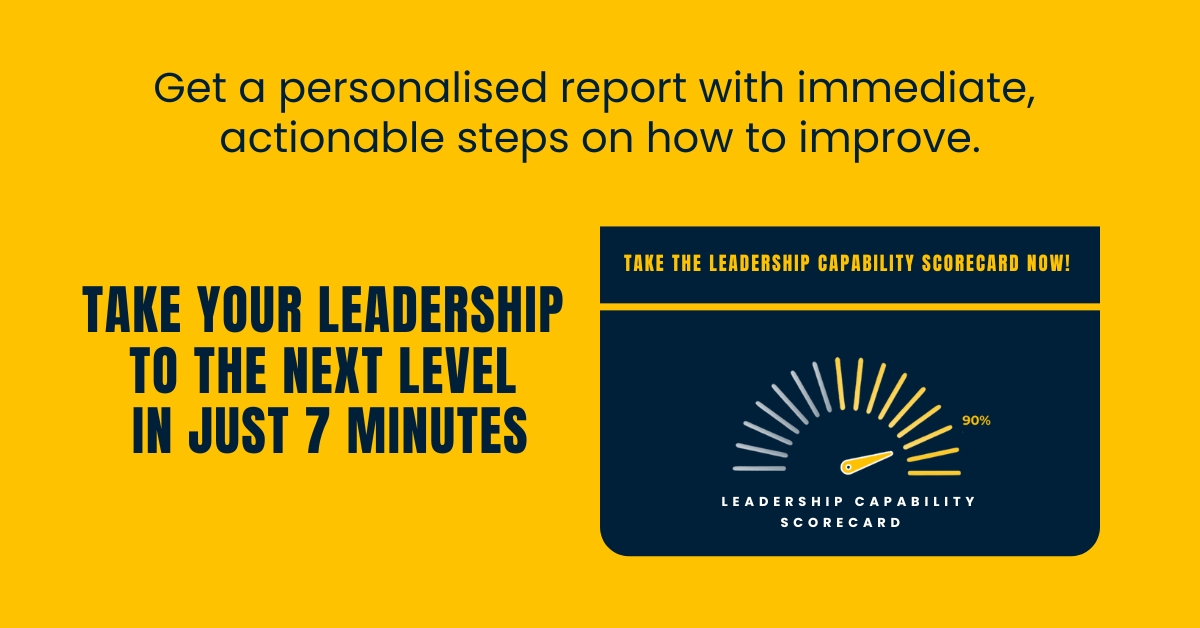
Ready to assess and strengthen your leadership?
👉 Take the Leadership Capability Scorecard and get a free personalised confidence insight report.


Subscribe to our Podcast
Hosted by our very own Ben Stocken and Benjamin Wade our ‘How They Lead’ podcast aims to evolve the way people perform in leadership roles by showcasing a variety of high performance interviews with people from Patrick Kershaw from The RAF Red Arrows to CEO’s like Steve Phillips who help large brands like Pepsi, Mars and Unilever.
Get one step ahead – Click below to subscribe.